
Caveat: In these quotes, I try my best to remember what was said, and to preserve the intent of it. If it’s inaccurate, please don’t sue me. I can’t afford it.
I own 7 cars. Why would I want to pay another 130k for another COE?
I might as well own a yacht.
I want to make Keppel for the young people, with the gyms, nightlife, activities. It’s going to be fun.
I wondered what stratosphere Mr Arthur Tay, the CEO of SUTL was living on. Well, it was clearly not mine.
But he was clearly seeing something I didn’t.
The government is going to have another 10,000 condos in Keppel. That’s my market.
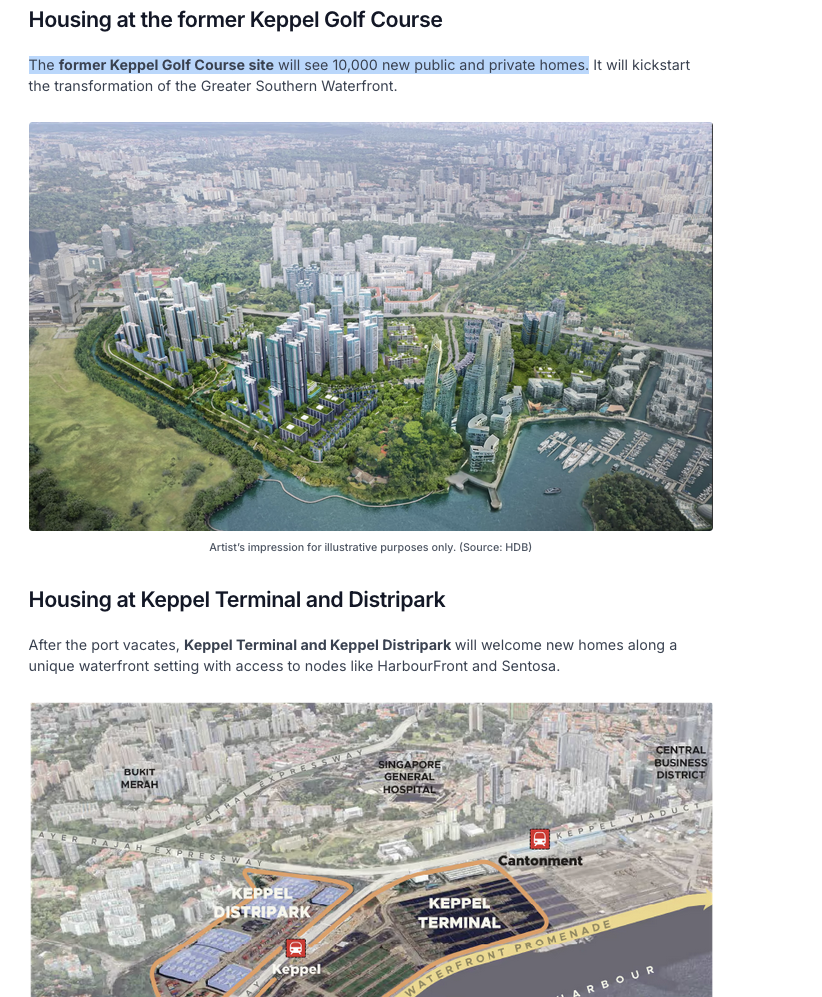
Tay had just bought the Keppel marina, and he was understandably bullish about its prospects. But if you took a step back from the fancy SUTL ballroom that day, and went into the real world, you might be wondering what Tay was talking about.
- Wasn’t inflation rising?
- Wasn’t the government concerned enough that it’d introduce a support package?
Yet it didn’t seem like this was happening at the higher end of the market.
In fact, just a few days ago, PropNex’s CEO Kelvin Fong had hinted that the past 3 new condo launches had been tremendously successful, selling above 90%, during the opening weekend.
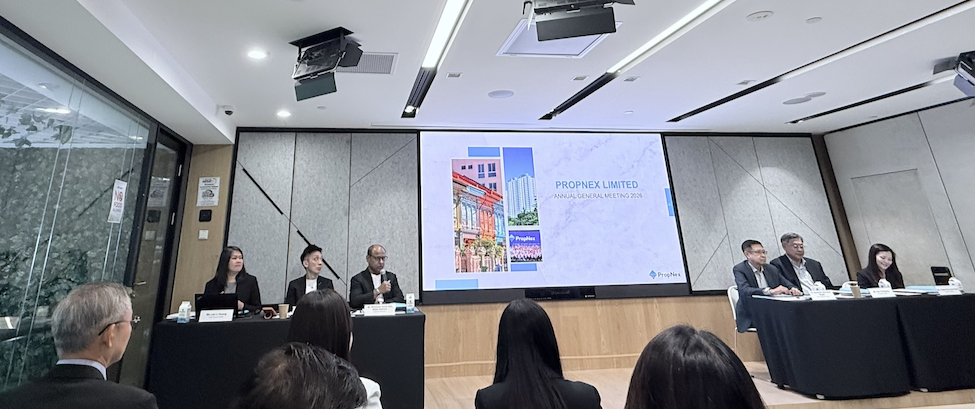
Let’s make no mistake. Singapore’s local market is extremely resilient.
For all the concerns about foreigners gobbling up Singapore’s properties, what is often missed are two key trends:
- The wealth transfer is happening, faster than ever, due to the government’s tighter measures around properties.
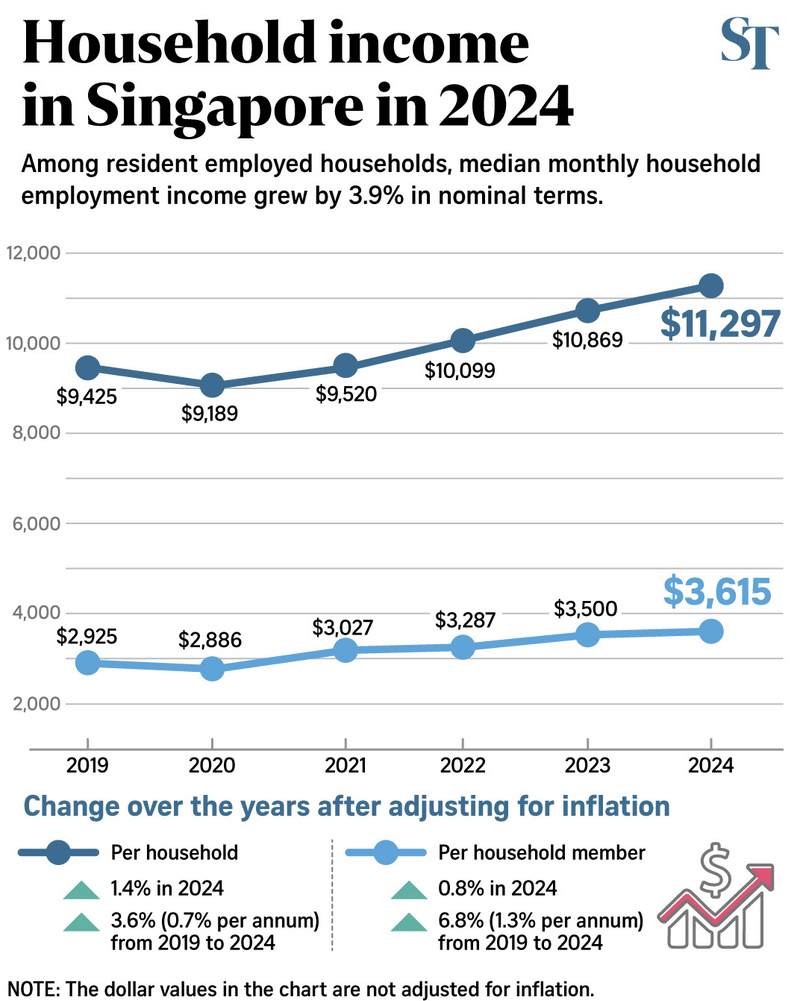
- Singapore’s households are still earning more.
I used to wonder how my friends did it. Singles were buying condos, and colleagues on 5k salaries were appearing with cars at work. How?
Then I realised,
oh, it’s the parents, or the grandparents who’ve left wealth.
So then of course, the question really isn’t what stock to buy to profit from this, but what stock you should not get.
Because amidst all the furore over how AI stocks are fueling the stock market, what’s often missed is just how well the Singaporean stock market has done. So I will make a bold move and say:
Maybe you should give those tech stocks a miss and look at the boring banks instead
One of the best AGM speeches I heard this year was from the venerable Andrew Lee, the Chairman of OCBC. In it, he said,

in these difficult times, we’ve depicted ourselves as a ship sailing into new waters.
And as a ship, we want to stay nimble. We don’t want to add on loads that we can’t take, like the capex that would have been required to redevelop the surrounding OCBC building.
But we’ve also added on more of what’s working. Like the GE acquisition of shares.
Why banks? Because banks thrive at arbitrage.
Singapore makes money at the margins
Singapore is an arbitrage economy. We make money at the margins. We don’t create any real value, but in the exchanges of value.
Created a new company? Set yourself up in safe Singapore, and create some jobs for our local economy. We’ll make money from the jobs you create, which spurs spending amongst your employees.
Want to set up a family office? Come again to Singapore. We’ll make money from banking you and your family, and from lawyering your family office.
Another great quote from former Foreign Minister George Yeo,
By helping buyers purchase cheaper and sellers sell dearer, Singapore adds value to the global economy and makes a margin for itself.
Arbitrage requires good physical and financial infrastructure.
- George Yeo, in his book “Musings, Chapter 22: Singapore and the World Economy”
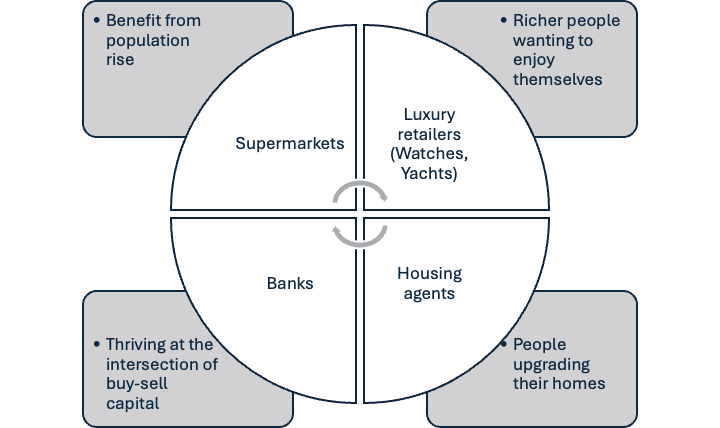
That’s why the big ticket consumer items like homes, yachts, and watches, have done so well in recent years. Because it doesn’t matter that you’re rich.
It matters that other people recognise your wealth.
But what happens if you’re not rich?
You’ve got to play the game
Growing up in an elite school, I was always angry and frustrated at why my friends’ families seemed so rich, and mine wasn’t.
We seemed to be doing all the right things. In fact, my father was working three jobs at one point, as a taxi driver, property agent, and financial consultant, just to put his three teenagers through school. But still, we never took a plane together as a family, and we went to restaurants once every quarter.
But then I was lucky. My friend’s family owned a listed firm. Over dinner, his uncle would regularly share,
oh I just lost 1m today trading.
That’s when I realised,
oh that’s where the real money is made.
So I tried to learn how to win in the markets.
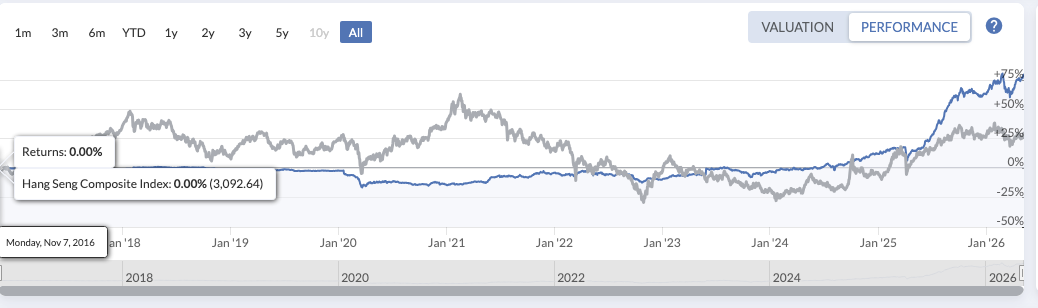
Since starting as a 20 year old, I’d been trailing the Hang Seng index. But then the turnaround came when I stopped holding onto the crappy stocks I held. I rotated them into better ones.
Find the business that reinvents itself
And I think that’s a beautiful analogy for what I’d learnt this AGM season.
Multi-Chem had been doing printed circuit boards for years, before they saw the trends. The Chinese players were better and faster. So they wound down that business, and went into cybersecurity solutions in 2002. No one cared much about cybersecurity then. After all, the only scams you knew were the ones from friends.
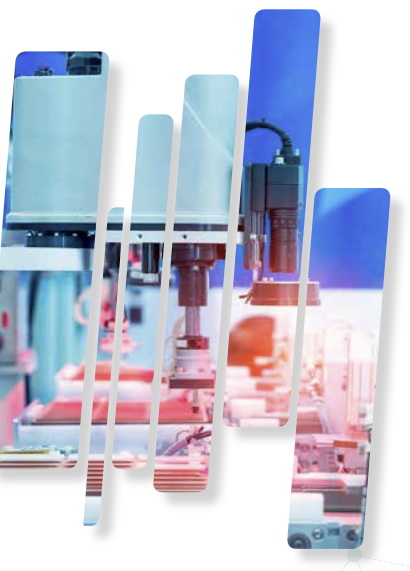
But Multi-Chem persisted. They built a name for themselves, and today, they’re the market leaders. Of course the question is how you find these brands.
Look at how they have dealt with competition, and you’d perhaps see some bright shoots of growth.
No one likes these stories of change. People complain about how Singapore has changed over the years, how it’s opened itself up to foreigners, and how its old manufacturing industries don’t exist anymore.
Others complain about how our malls now have an influx of Chinese brands. They complain that rent is unaffordable, and that local brands can’t win.
Yes, the government could do more. And it has tried its best, whilst being friendly to overseas businesses. Would you rather enjoy the nostalgia of an old economy, or the joy of seeing your SGD strengthen against the places you travel to?
One also recognizes that if the businesses lose, it might just be because they’ve not come up with better ideas to reinvent themselves. And that’s no one’s fault. If anything, it’s our fault. We can’t blame it on anyone else.
The only thing we can do is to trudge forward, and to fighting forwards.
I own OCBC, SUTL, PropNex, and Multi-Chem; and might benefit from the growth of these shares.