
In March, post Budget, I started pondering:
Why don’t we feel the sense of hope that we see in our macroeconomic data?
GDP growth, low unemployment, and a budgeted surplus seem great.
But why do we as young people feel so jaded, uncertain, and uneasy?
Many chalk it off to the existential threat of AI. But let’s go a little deeper.
Let me start with a story of a friend. Graduated from an elite school, and later graduated from NUS. Started a career in financial advisory. After two years, he realised this wasn’t the thing he wanted to do, and started looking for a different job. For two years, he went for the Government’s SGUnited programmes, and got short trials, but never landed a full-time job.
He was constantly applying for jobs, but never getting them.
So after 2 years of searching, it was a relief when he finally got into a company selling plastics. For 1.5 years, things looked rosy. He was traveling for work, speaking to suppliers, and then all of a sudden, his company collapsed.
He started looking for work again. He got a short 6-month stint in a major FMCG. It was supposed to be a maternity cover, but at the end of his stint, the procurement roles were moved to Thailand. He and his manager didn’t have any more jobs. He started searching for the next one, for another year.
He recently got another full-time job. But despite working for all of 7 years, he’d taken 4 different full-time jobs.
This story sounds abnormal. But as I began to speak with more and more friends, I see this is not all that unusual.
The loss of entry level jobs to regionalisation and technology (hat-tip to the guys at The Woke Salaryman for teaching me these)
It used to be that as a young person, you could slowly develop your career under the pupillage of good mentors who could groom you to eventually go into their position.
But anecdotally, I know some of these entry level jobs at the 3 to 5k mark are being optioned to the regions, where a Thai or Indonesian would happily do it at 1.2k.
And frankly, at the entry level, with everyone being so junior, there’s really no way that one can distinguish between the Singaporean and the Thai’s work. So why should a business pay 2x for a Singaporean?
Tough question, and which genuinely forces businesses to think: The Singaporean is good, but is he worth 2x the salary?
So the business takes the economically pragmatic path, and ships it abroad.
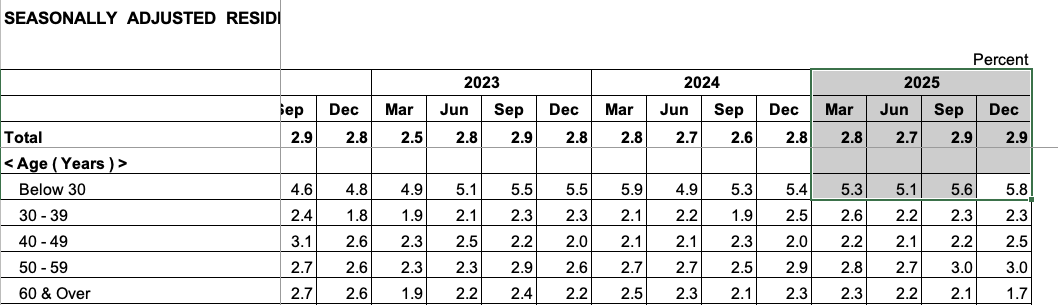
So I do admire the Government for proactively coming up with GRIT, but one can see that despite the Government introducing GRIT, the unemployment rate for those under 30 has grown.
At this point, you might be anxious, and wondering what you can actually do to help yourself. But hold on.
The other factor that we also have to recognise is that the technology powering our economy today has made working a lot more precarious.
The rise of the precariat
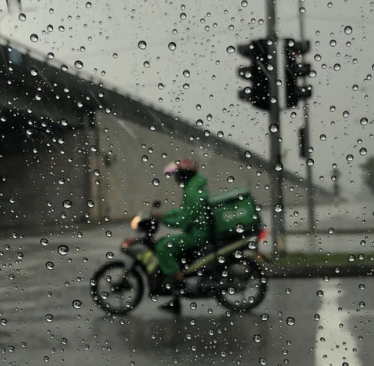
Early in university, one life changing book was Guy Standing’s ‘The Precariat’, that talks about how the shape and structure of the world’s economy has increased the precariousness of a worker today.
Experiences like:
- You don’t want to work here? Sure, there are tons of cheaper, faster, and better software engineers in Indonesia, Thailand and Vietnam that we can use.
- You want rights? Sure, you can work somewhere else.
- You want to work? Sure, use our platform. We’ve no obligations to protect you, but you’ve to string bonuses together like a cat chasing a string (See Grab, Deliveroo etc.)
Businesses no longer feel a strong tie with the local economy. No longer does a business feel that its priority is to develop the local community, but rather, to protect its profits at all costs.
It used to be MNCs that could do this. But SMEs can do the same too, with the accessibility of tech tools making work, increasingly remote.
Take my industry in the graphic design agency space. We’re SMEs, and costs matter. So I’m guilty of doing what many others are doing.
Book clients in SGD, pay salaries in Indonesian Rupiah for about $800 a month. Pocket the difference.
The trick?
- Subscribe to a Zoom account of $19.90 a month.
- Find a Personal Assistant from Indonesia, who can introduce you to her network.
- Hire at $800, charge at $3000. Pocket the difference.
The corporatisation of community, and how we no longer feel we can depend on friends to watch our backs, to introduce a job, or a partner
Have we become a society that doesn’t bother (much) about developing our hyperlocal community, in favor of what’s most pragmatic?
Take the proliferation of dating apps, which I think is the easiest example of this. In the past, we would talk to someone at university. Take the risk of SMS-ing, developing a friendship, and then asking her out.
Today, we don’t dare to do that. We meet only if we match, and like each other.
Or take the example of Grab. We don’t even feel comfortable asking for lifts from colleagues, or friends today. It’s easier to swipe away the niggling discomfort of asking (and being in someone’s debt), and just ordering the Grab.
We talk about community being a two-sided thing where people can give and receive, but we dare not ask, because we don’t think anyone will give.
It used to be that with jobs, you could depend on a recommendation from a friend into a company. Or you could pull a string with an acquaintance, and ask if they have an opening. But today, we spam LinkedIn and job portals, and hope someone gives us a job.
And even when it comes to parenting, we feel it’s hard to ask a neighbour to take care of a kid for an hour. We just get a helper, pay that $900, and be done with it.
We’ve corporatised community. Made it professional. Convenient. Pay, and stop worrying about needing to ask anything, of anyone.
Yes, this is a global phenomenon, where tech companies realised that they could make money from getting us to be more lazy, and to take less emotional risk.
- Don’t ask for a ride, just order a ride.
- Don’t ask librarians, just Google.
- Don’t think, just ChatGPT it.
It’s come to a point where our Government needs to set up a $50m Partnerships Fund to spur people to do good works. The Government has to pick up the tab, if we want to do good? Isn’t this a little ridiculous?
Please don’t get me wrong. Yes, we shouldn’t expect good-hearted individuals to endlessly fund good works. But you’d expect that these good-hearted people would be funded by other generous people. I wouldn’t have thought that we’d always have to depend on the Government for everything, even a ground-up initiative. We have our networks. We dare to ask.
On the other end, our community wants to give, because we believe that community, is everyone’s responsibility.
But it doesn’t seem like we have enough faith in our collective, Singaporean humanity to fund the good we want to do.
Have we as a society, really come to this state?
And so the question really is, with the economy and our community in such a state,
as young people, are we set to fail?
Our sense of unease over what is reported, and what we genuinely feel
And the deeper question is,
despite the headline figures, why don’t we feel or experience the macro rosiness the government reports?
5% growth in GDP. Increase in taxes collected. Budgeted surplus. None of this is bad, in fact, it’s good to have a government that still preaches caution whilst achieving such stellar economic performance.

Sociologist Teo You Yenn puts this beautifully in her new book, Unease.
At meetings and seminars, I notice people – politicians, civil servants, academics, ‘thought leaders’—implying that the problem Singapore faces is that Singaporeans have overly high expectations of life and public services precisely because the PAP government has been too effective. In the strongest version of this argument, ordinary Singaporeans simply do not know how good they have it relative to people in other countries.
If Singaporeans feel insecure, precarious or, as I am putting it, uneasy, this is not necessarily because they have anything real to feel bad about, but because things are so good in Singapore that their expectations have become unrealistic.
In a sleight of hand, the unease gets relegated to the (mistaken/irrational) mind, and the problem the government has is one of communication and, indeed, of over-competence.
Please don’t get me wrong. The government has done a great job in what is a complex economy. They have chosen to double down on Singapore’s strength as a hub, positioning it best to capture trade flows.
But successive generations of Singaporeans are feeling the scarcity of surviving in a place like this.
Which we express through our fertility rate
One proxy measure is in our fertility rate. You bring babies to the world when you feel a sense of abundance, that you can afford the time, space and energy to give to a creature that needs all of you.
You don’t procreate, when you feel anxiety about whether you can afford it. You want to keep more of your money, for yourself. Why give it to a baby, that doesn’t seem to bring much beyond loud cries and the occasional chuckle?
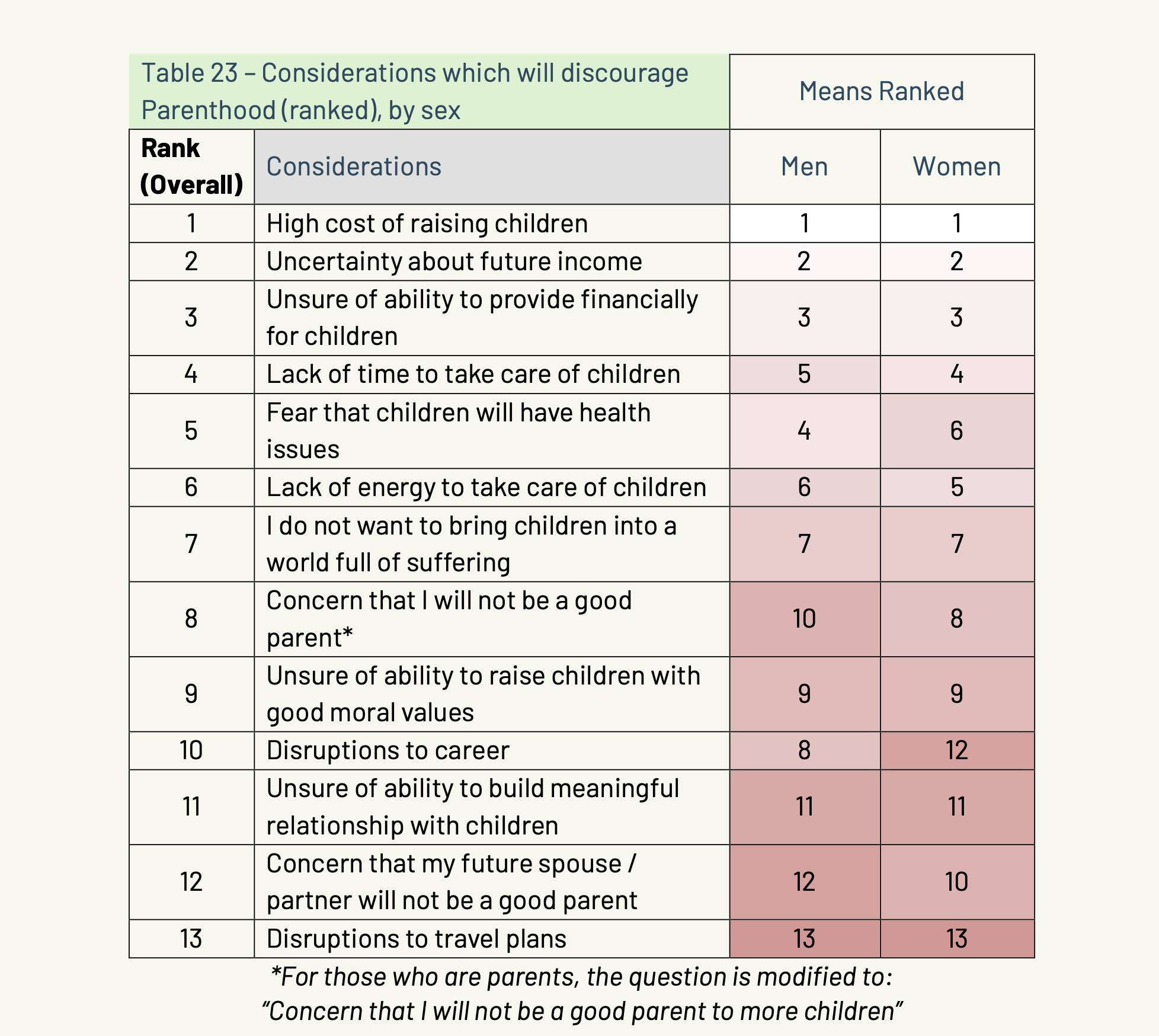
Cultivate SG, a non-profit, recently released a study about the concerns people had towards parenting, and top of the list is cost. But move slowly down, and you’d see just how much of those factors relate to this feeling of scarcity.
That no matter how hard I work, I just don’t think I’ve enough to provide for someone else.
But if we’re to continue surviving in Singapore, part of our work is to examine how we as youths, are to thrive in a Singapore like that.
How do we give ourselves the greatest measure of success? That first requires us to understand the positioning of Singapore’s economy. I’m not a macro economist, so I will just take my simplistic understanding of what’s happening on the ground.
2 stats that surprised me about the structure of Singapore’s economy
George Yeo, former Foreign Minister of Singapore, once observed that Singapore is an arbitrage economy.
By helping buyers purchase cheaper and sellers sell dearer, Singapore adds value to the global economy and makes a margin for itself.
Arbitrage requires good physical and financial infrastructure.
- George Yeo, in his book “Musings, Chapter 22: Singapore and the World Economy”
Let’s start with a quick stat from our acclaimed DBS.
Stat 1: Money is flowing in
The running joke in investment circles is that you should have bought the DBS stock today, and better if you did it yesterday. Make no mistake, the Government’s move to capture wealth flows, is working. Look at the Equity Market Development Programme (EQDP), and how that has lifted Singapore’s tepid stock markets.
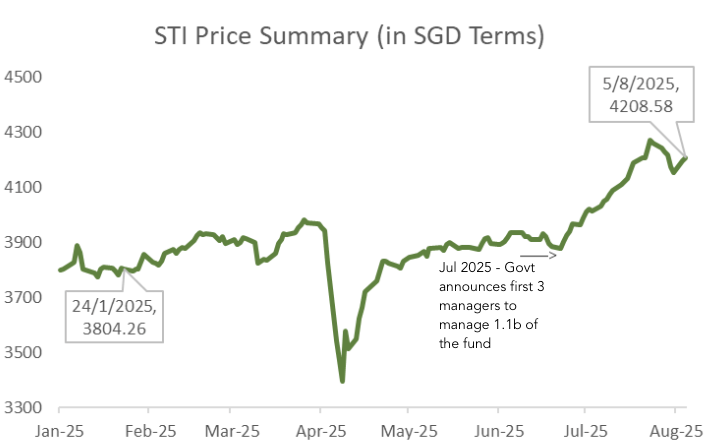
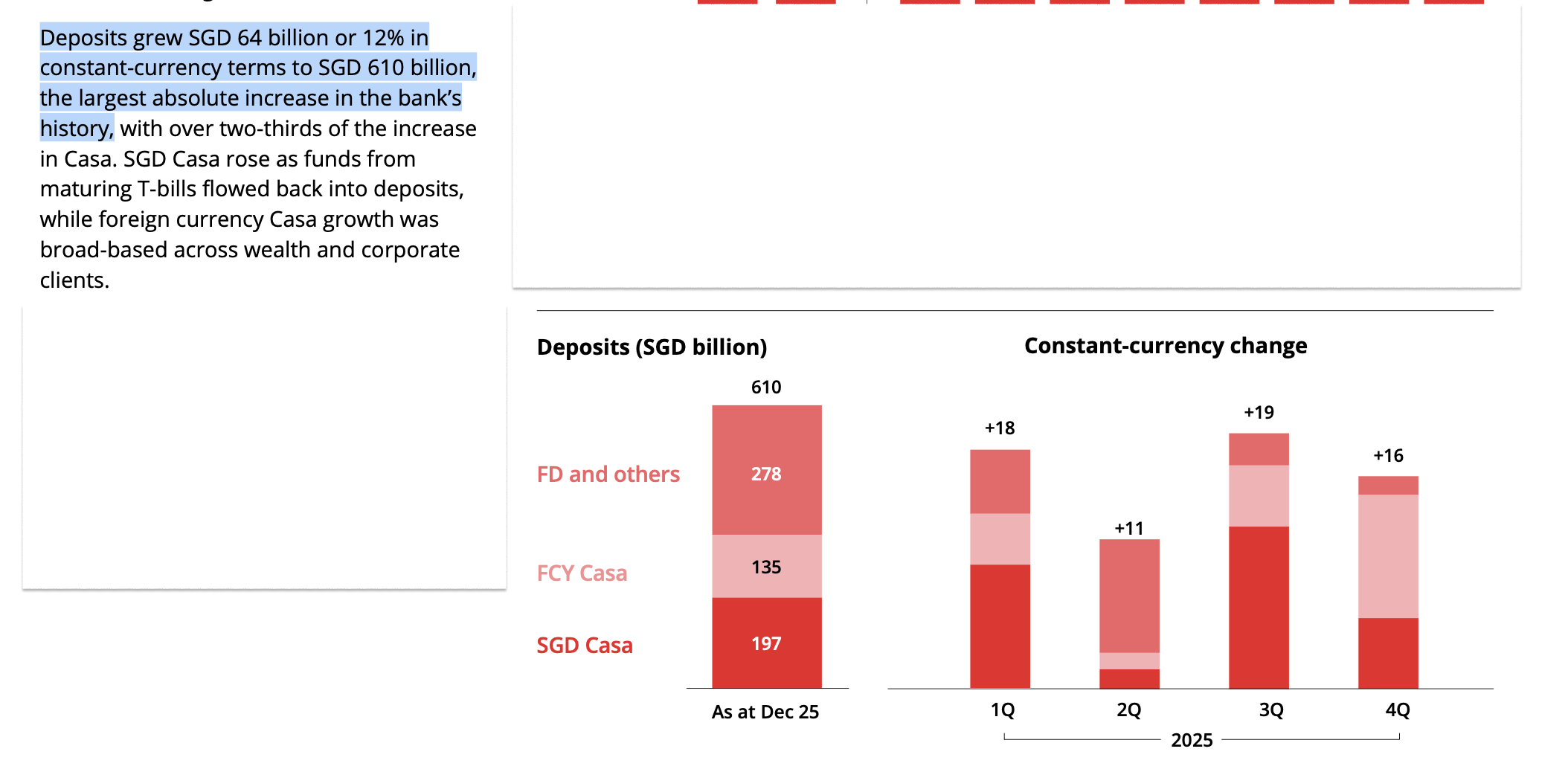
And DBS is one of the beneficiaries of this movement, growing an astonishing 12% in its Casa deposits, “the largest absolute increase in the bank’s history.”
So we know that wealth is flowing into Singapore at unprecedented rates. It’d be easy here to pull out the stat on the year on year growth in property prices, but what I thought was more interesting was found somewhere else.
The growth in Sheng Siong outlets. Now, now this sounds crazy, but stay with me.
For years, we’ve known Sheng Siong as the auntie’s supermarket, where you’d turn on your TV on Saturday 8pm, and the camera zooms into an auntie yelling 百倍,百倍,百倍!(100x, 100x, 100x!)

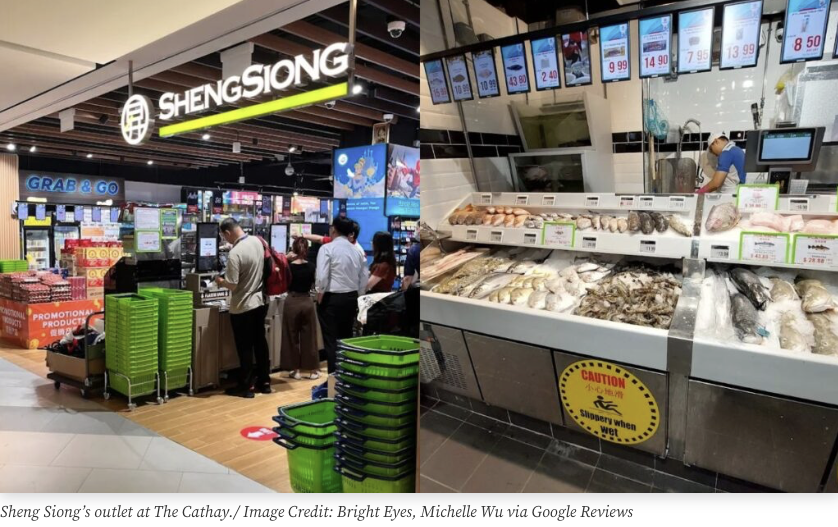
But we now see them penetrating every corner of the Singapore market, including, hold your breath, Cathay. You might think Cathay’s management would see a Sheng Siong with screaming aunties as off-brand, but even they have wised up to Sheng Siong’s magical crowd-pulling abilities.
In fact, in 2025’s April Annual General Meeting, I asked CEO Lim why he wasn’t going into the malls, and he said something deeply profound.
你要知道谁是大哥,不要抢大哥的饭。我们小三,剩下的饭也能活。
你追人的时候,跟人追你的时候,价钱就不一样了。
很多中心请了不同生意,但总是不能带人进来。但是我们一旦进去,就不同了。
In the market, you need to know who big brother is. As number 3, we still can survive on the scraps.
The price is different when you chase people, compared to people chasing you.
These malls have invited many different businesses, but they can’t attract crowds. But when we go in, things are different.
CEO Lim was inevitably referring to FairPrice, the national supermarket who’s dominating the stores in major malls. He could have chose an expansion strategy that competed directly with these malls, but he chose to look at the suburban heartland shops, and slowly grew there.
But what changed in the last year, has been their move into the second-tier malls, and that’s where there are lessons for us young people.
Stat 2: But middle classes are also feeling the pinch
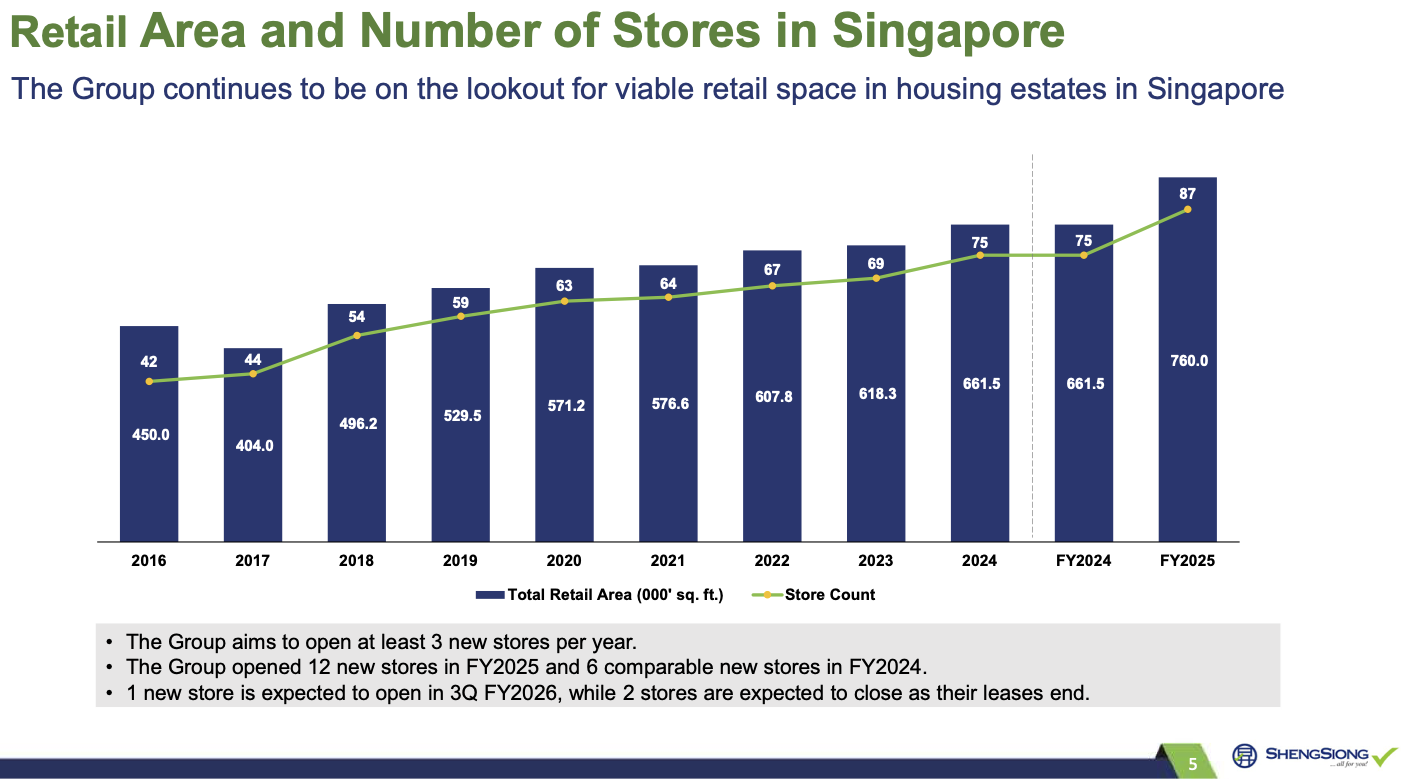
The middle-classes are seemingly chasing grocery deals too. They have more than doubled their store network in 10 years, and have grown so big that they are building a new distribution centre.
Of course, this isn’t a paid advertisement telling you to shop at Sheng Siong. But the point here is that it might make sense to learn from these middle classes. Spend less, and stretch your dollar.
So what do we do?
But let’s get down to some first principles, rather than giving you a laundry of list of ideas. After all, AI will probably give you a better answer than me.
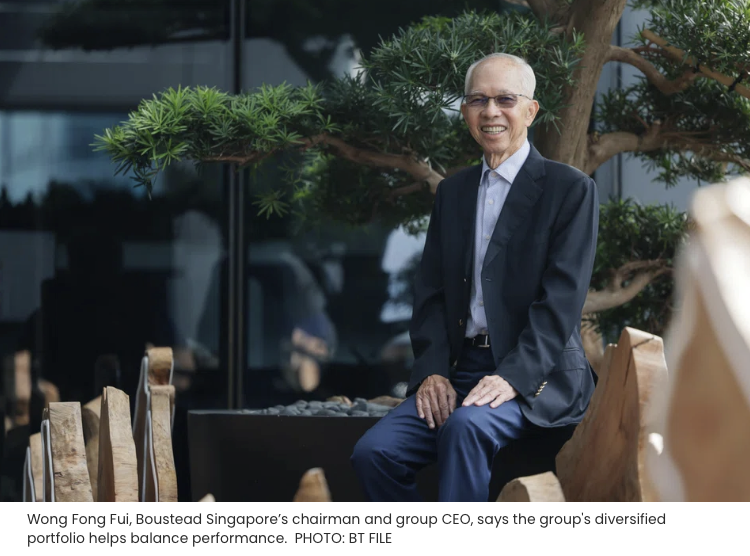
I’ll start with one of my favorite stories from the legendary FF Wong, who’s today the 84-year-old Group CEO who’s still leading Boustead.
He’s the man who turned around QAF, the food manufacturer behind Gardenia. When I first met him in his office in 2025, he shared about his early days finding business, and how it was difficult within Singapore to build business.
He had to go overseas, cap in hand, trying to find new business. That was how he ended up working with the Bruneian royal family, turning around Myanmar Airways, and then QAF with Gardenia.
Be your own port of call, and stop complaining about what others should do for you
His gumption is something we often don’t see within many Singaporeans.
Rather than hustling for business, here, there, and everywhere, we do sometimes complain too much about how the Government should do X, Y and Z, and isn’t being fair to us. Yes, if you nitpick on everything, anything can be improved.
But if you learn to take things into your hands, you’d find more hope. Here’s where I’d like to posit that it might work better to take Singapore’s idea of being a port. It used to be a physical port, but has today become a port of ideas, talent, and capital.
How?
First, keep building something valuable that people want. One inspiration I’ve learnt is my friend, who’s built multiple product brands from nothing. The model is simple.
- Understand search volumes.
- Pay a China factory to manufacture the product.
- Brand and market it.
- Sell it at a difference.
Of course, it’s far harder to execute.
But how do you build these skills? Be so good they can’t ignore you.
Find strengths, not just skills
He might look like a genial, old man, but behind his kind face lies a sharp wit. One line that he still leaves with me is this, “We’ve always found sunrise industries in niches to work in.”
Just look at Boustead, who was hemorrhaging money when he first took over. He said several times that he paid $87m just for the 190-year-old name, and did not know the mess he walked into.
But over time, he found the gem in geospatial technologies, that Boustead held the license for. As Singapore and the wider Asia developed its infrastructure rapidly, there was a greater need for geospatial technology to map out the area, so that civil engineers and architects could work accurately.
The natural question that follows is assessing whether your current skills are sunrise or sunset ones, but that might be too black or white.
Firstly, because one never has a crystal ball, and it’s hard to make an accurate assessment that one skill would be more relevant than the other.
Take the mad AI craze now. In Stephen Witt’s biography of Nvidia’s founder Jensen Huang, he writes,
“No one, not even Catanzaro, had seen the intersection of parallel computing and neural nets coming.
Two fringe strains of computer science, starved of investment, hated—no, detested—by industry and researchers alike had somehow unified to form a thriving, sprawling entity now careering toward sentience.”
Aarts, a computer engineer who understood the technical aspects of these two fringes of computer science, shared with Witt that “there is no way that Nvidia is this lucky. There’s no way that deep learning just fits this perfectly because Nvidia has never put any effort into it!”
The Thinking Machine, Stephen Witt
Huang called it “luck, founded by vision.”
But both Huang and Wong understood something about themselves, and play those strengths well. Huang knew he was an excellent engineer, and kept building the system around him.
Wong excelled as a turnaround artist, who was able to go into poor businesses, hive off the unprofitable ones, and strengthen the great ones.
So the question you must ask yourself is,
where is your strength?
Because those skills, are just the supporting bases to the overarching strength, and those skills can keep being changed.
For example, within the search engine optimization tools industry, Ahrefs, the market leader, knows the strength it outperforms everyone in, is not marketing.
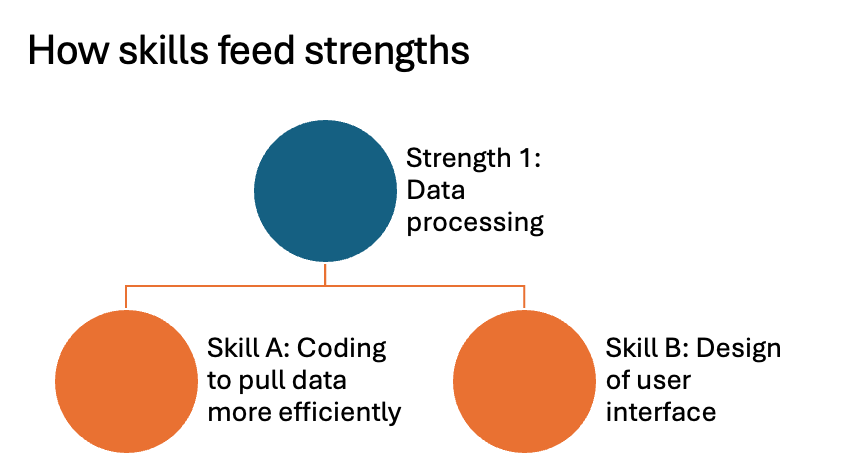
It’s data processing. So it keeps iterating its skillsets to take advantage of this.
But you need to work hard
But one often forgets how hard these engineers have worked just to get to their level of success. Boustead’s CEO FF Wong also started life as a chemical engineer. After leaving his job in a major petrochemical, he had to learn how to knock on the doors of potential leads, often getting turned down.
And one of my fondest memories of him came when a shareholder, during the re-acquisition of Boustead Projects into the parent Boustead in 2023, said to him, “You should be happy to be earning at both ends,” alluding to FF Wong’s twin shareholdings in both Boustead and Boustead Projects.
Pausing at the microphone, FF Wong gently replied, “You don’t know the work that has gone into it.”
Stop complaining, start building stuff
I will close with this final story. Between October 2021 and April 2024, I struggled to find a job in the social services. For 2.5 years, I sent 364 applications, and got 41 interviews, and 0 offers. It wasn’t even that I was picky.
For a long time, I was angry. I thought,
I’m an overseas scholar! A first-class degree holder!
A former board director, an author, how can I not get a job?
But I soon found out that this experience was not unique. Even PHDs struggled to get jobs.
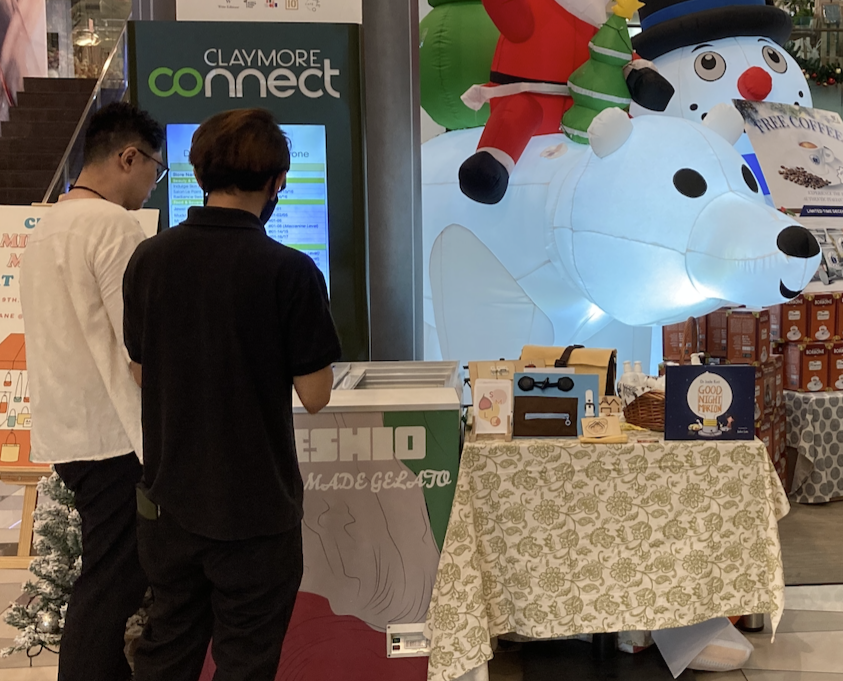
Somehow I managed to survive on the small income freelancing as a writer, a website-maker, an IT support on Zoom trainings, a facilitator, trainer, and even as an ice-cream salesman one afternoon during Christmas.

And I look back at those times, and I’m grateful that during the times when I had a job, I started building something of my own. Yes, they were simple article websites called savethesocialworker.com and liveyoungandwell.com. And yes, they were just SEO focused, and not good writing.
When you work the hardest, then find people to work with you
It was only when I finally exited my full-time job with these two websites that I started looking for people to go on this adventure with. Doing something, anything, is hard. That’s why you’ve to do it with people. Learning to ask for help, and to be vulnerable, is hard.
That’s why we rather outsource it to tech and money. Pay money, use the app, and remove the discomfort of having to ask for help. Most times, when founders look back, they talk about the crazy ride they went on, with partners that accompanied them on the journey.
I had no business degree and only a flimsy social work degree to boot.
But in the end, it worked out. Just grit and iteration. No special skills.
Backs to the wall, with nothing but your pure grit to survive, you’ll find a way. You just have to be convicted enough.
And yes, these may be difficult times. But the courage, conviction and commitment that brought Singapore here, needs to be found again. In its place, we need to sacrifice the expectation, that Government can and should do something for us to succeed.
They can do everything, but we need to do some things, too.
无话可说,只是看看