
Early on in my investing journey, someone further along in his journey told me,
investing is not a numbers business, it’s a people business.
Over the years, it’s rung true. Often when I share an investment idea, someone would add,
doesn’t that PE seem pricey now?
Or when I talked about PropNex in April 2021, when it was about 96 cents, my dad told me, “Well, how far can a property agent go?”
Call me sentimental, but I always end up reading the ARs, going to the AGMs, walking the shops, and getting a sense of who these managers are. Because it is them you’re investing in, not really the company.
You’re believing that they can do wonders with your money, better than what you can. So I will use what I’ve learnt from them, and how that has helped me to be a better investor.
Trust the owner operator, instead of entrusting your business to a manager
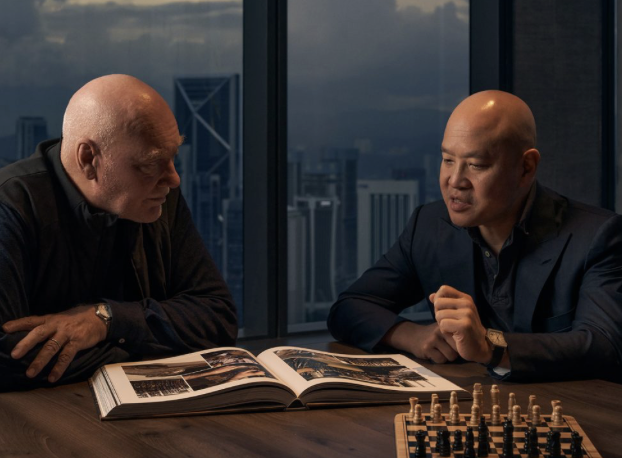
During July’s AGM with The Hour Glass, a portly Italian, dressed in a nice suit, joked,
Well, your pay is also pretty high.
Michael Tay, the CEO of THG, didn’t even try defending his pay. He poked back, “You can try running it.”
But he pointed out, “In my contract, I can fly business. But I don’t for domestic flights.” I think he meant short-haul, but either way, it shows a carefulness with how they are using their money. Because it’s not just ‘shareholders’ money’. It’s actually his own money.
You can see how this deep sense of ownership influences Tay, in how he treats property purchases. He observed that he could have taken on more debt to pay for the property in Melbourne, Sydney, but he chose not to. He’d seen how debt had nearly destroyed his own family, and he was averse to taking debt.

It’s also why they are cautious with how they are issuing dividends. Despite cash flows being strong, they continue to sustain rates at around 4 to 5% yield, rather than increasing the cash they pay out.
Unexpressed ROCE
But one cannot ignore the internal ROCE that is unexpressed in the share price, or the dividends you take out of the business. It is what Warren Buffet loved to call ‘lookthrough earnings’ – the operating and retained earnings that are not paid out of the business.
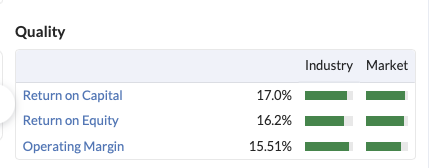
Which brings us to yet another of my favorite owner-operators, Sheng Siong.
I couldn’t stop laughing at 2025’s AGM with Sheng Siong, because Lim Hock Chee, the CEO, was just too funny. He shared about how competitive the Chinese street grocers were compared to his supermarkets now, and how they were now ‘trying to test them’. Or how when he first started, he learnt to 睡了又做,做了就睡。
When one former institutional investor started asking him about why he was keeping so much cash, he replied, “钱不是万能,但是如果没有钱,你就万万不能。”(Money is not all-powerful, but if you don’t have money, you would be no-powderful. Forgive the Singlish, Sheng Siong is after all, proudly Singaporean.)
Yes, I’d be no doubt biased to a CEO who’s not averse to stacking his own shelves.

But the deeper question is whether such character qualities are too much to pay for. Before that, let me take you to a strange sight I once saw in 2024, in Botanic Garden’s Cold Storage, before Macrovalue’s $125 million acquisition in March 2025.
Stop listening to the men in suits
A group of fifteen are crowded around a man in a suit, and they are listening to him talk about how competitive the market is.
Down the road, there’s FairPrice Finest, who have been getting many of our customers.
But I want to still thank our staff here at the counters, who are fighting everyday.
There are fervent nods across the group, and the suited man continues to walk around, introducing them to various places they can “optimize”.
You see here our product mix. It can be improved.
More technical jargon. More scribbling across notepads.
One can only tell the end-result of that exercise. A sale to Macrovalue, and the continued demise of Cold Storage.
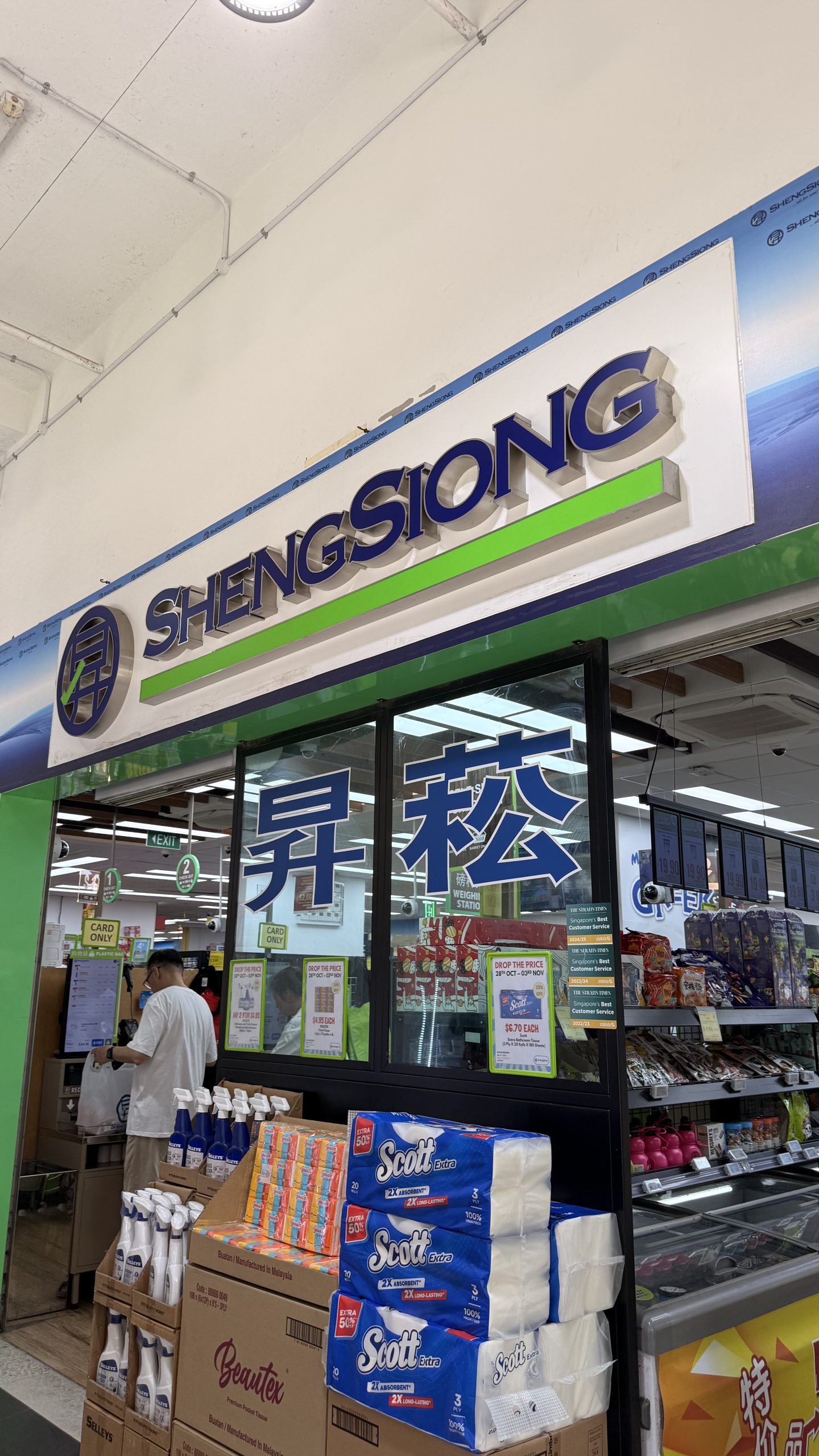
Compare this to Sheng Siong. There are no men in suits, and no managers preaching on the shop floor. Instead, when I met the next generation of managers, people like Nigel Lin, the Director of Supply Chain, People and Partnerships, would sit in a plain short-sleeved buttoned shirt. No fancy laptop, no iPad, nothing. Just him and me, talking.
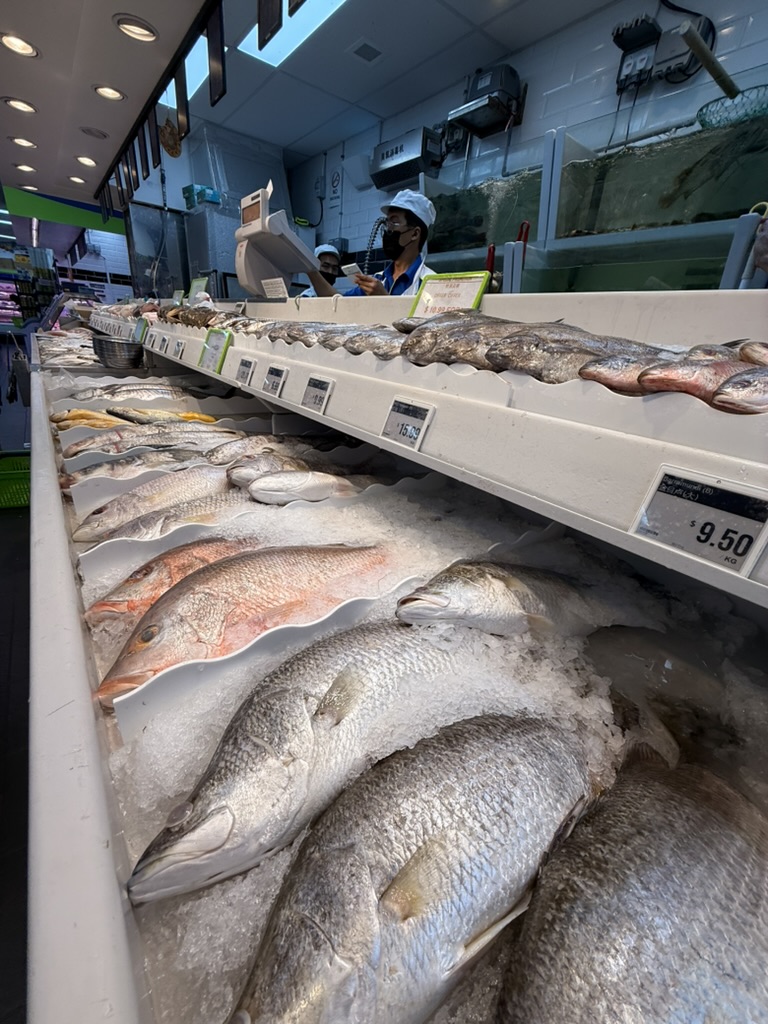
They execute on a simple strategy.
- Grow store count to 120.
- Improve gross margins by encouraging fresh food sales.
- Improve underlying tech (such as making a full robotic warehouse, improving their store displays, their checkout counters)
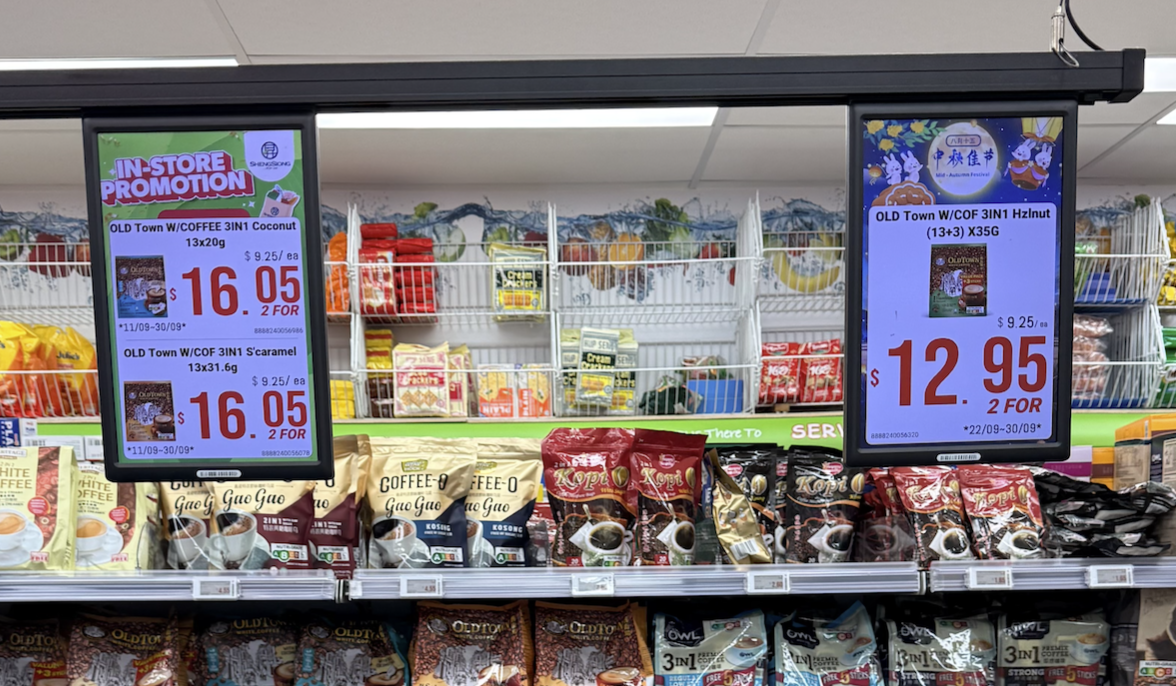
Over and over again.
If there’s one simple investment lesson here I’ve learnt, it’s to avoid managers. Find owner-operators that are still running the business.
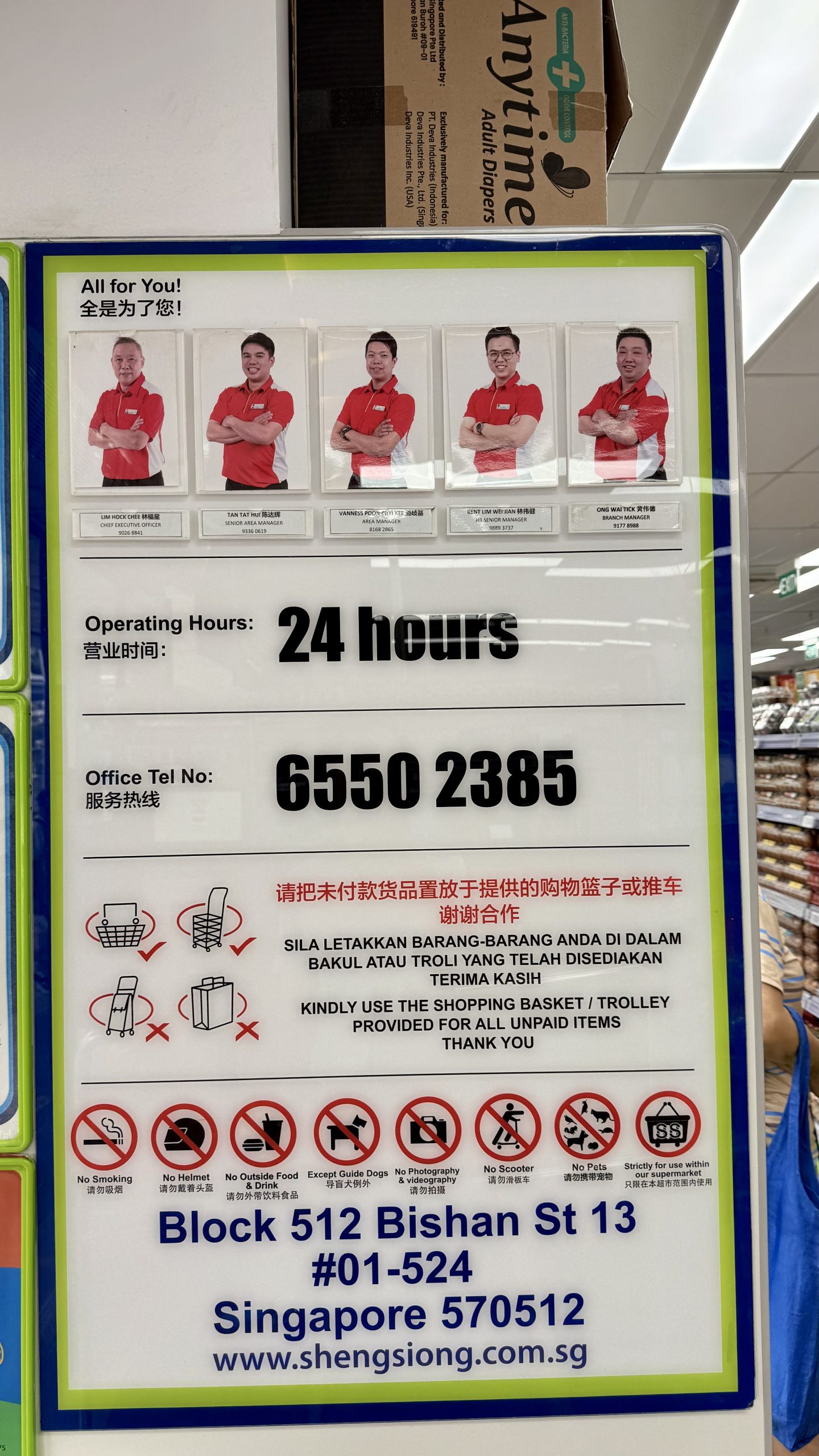
On a sidenote, the CEO’s number is listed on every store, so you can call Lim and complain about your pork. That’s real commitment.
Don’t just hold a view, take the view
One insight that came was during a quarterly briefing from UOB CEO Wee Ee Cheong, He said,
we hold a view, and we are taking that view.
Views are easy to have. Actions are harder to take. It’s easy to say “I think …” It’s far harder to execute on that thinking.
It’s like going to a buffet and saying, “Ooh, isn’t that nice?” But never taking your plate, and eating the food.
When I first started as a pimply 20 year old, it was easy to go on and on about what stocks were great, but never take any action.
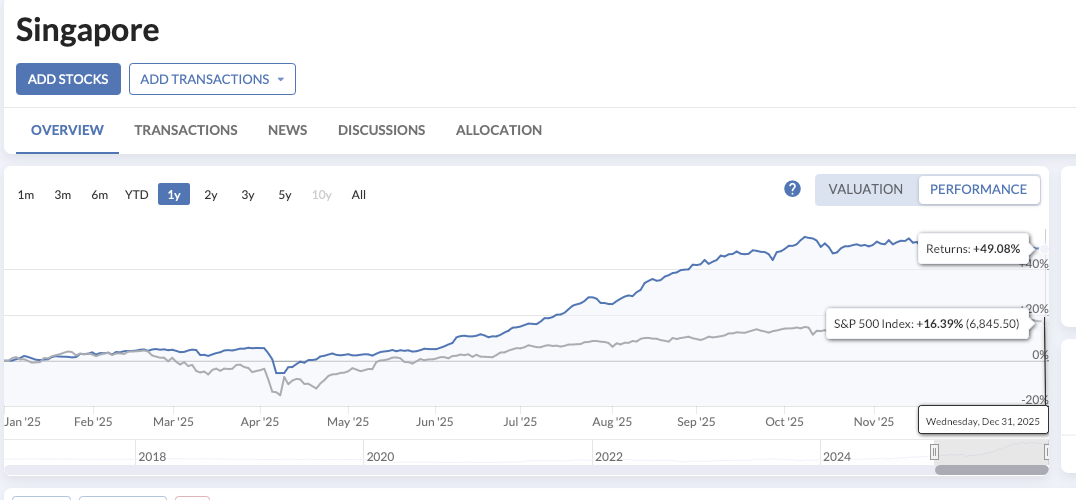
This was the first year where I took some stronger views on how things were bubbling up, and positioned the portfolio accordingly.
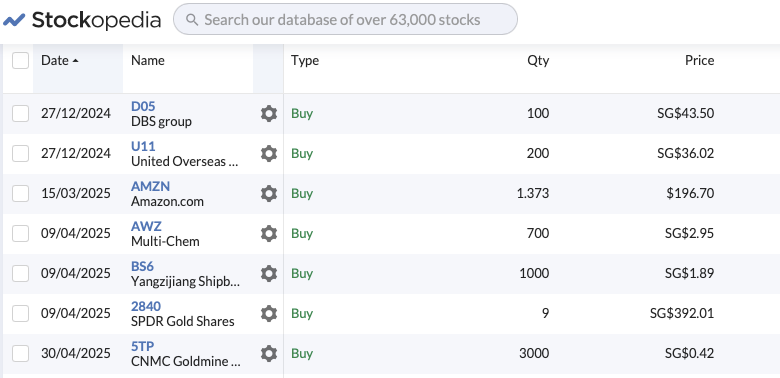
Whilst I only bought 20k of stock, it was the first time I did it whilst thinking seriously about what I was doing.
- Shifting from the US, into Singapore
- Catching the capital flows moving into Singapore’s shores, to its banks
- Hedging the world’s volatility by buying gold
One of those bets was on the continued strength of the Singapore economy and an accompanying question,
how could such a small country still thrive?
Yes, we might not have the next Google. But what we do have is the continued trust of nations.
This brings us to our final story. In November 2024, whilst we were nobodies in the publishing sector, having self-published all of 3 books, we asked our Indonesian colleague if she could get us a meeting with the biggest publishers there – Gramedia. The heads of business spoke to us there. Walking in, it was hard not to feel entirely empty, and as if we had nothing to add. I was 29, and they had run the book business since 1970, for 55 years.
It’s why I keep telling people – you don’t have to trust Singaporeans. But it helps to trust Singapore.
Because of the brand it represents. The strength of people’s trust in us, is most expressed in our currency’s strength, which is hard to believe, given our size. What’s happening? People trust that we’ll say what we do, and do what we say. In an uncertain world, taking you at your word, is one of the most difficult qualities to find.
Intellectual surrender
I dare not make any predictions about where the economy will go, or what one should buy. But something else that changed me was Seth Klarman’s quote.
The danger is that indexing effectively prevents the market from performing its essential function of price discovery. It encourages a lack of discipline.
Today’s high-multiple companies are likely to also be tomorrow’s, regardless of merit, with less capital in the hands of active managers to potentially correct any mispricings.
Stocks outside the indices may be cast adrift, no longer attached to the valuation grid but increasingly off of it…
The danger is that index funds encourage you not to think, which is dangerous because when you stop thinking, you stop being a disciplined investor.”
The attractiveness of index funds is that you can make money without thinking.
It encourages intellectual surrender.
What we often discount is that investing is a discipline of the mind. You have to cull your choices, tune out the noise, find the signal, form a hypothesis, gather data, and execute against it.
None of that is easy. The danger, as with the convenience of ETFs, is how it encourages people to stop thinking. Sound familiar? It’s already been done throughout history, with the most recent example being social media.
Don’t think, just scroll. Don’t think about how Facebook makes its money by monetizing your attention. Don’t think about how WhatsApp hooks you by pinging you variably, so you always want the dopamine hit of getting the message, even first thing in the morning. Don’t think about the fact that even though your child is in front of you, you’re swiping stories on Instagram.
Don’t think about how you’re no longer able to remember what you opened WhatsApp for, because you lost the thought when you got inundated with tons of messages.
Think about what you’re paying attention to. Because if you don’t, you won’t just end up with a subpar year. You’ll end up with days where you just feel like you scrolled, cleared your inbox, but never moved towards any real goals.